
Lawyers spend years learning to master detail. Now most advice I ship is three sentences. Sometimes two bullets. Sometimes just a gif.
You know the old line: I didn’t have time to write you a short letter, so I wrote you a long one instead. Shorter writing takes more time. You have to understand something cold before you can boil it down.
That’s most of the job when presenting to senior leaders. A VP doesn’t have time for the detail you waded through. You learned it so they don’t have to, and you hand them the part they can act on.
For most of my career, that meant fewer words: a tighter email, a cleaner summary.
Now it can also mean a visual format, because I can build one in minutes with AI. Here are four examples.
Everything here uses synthetic data from various practices for illustration only.
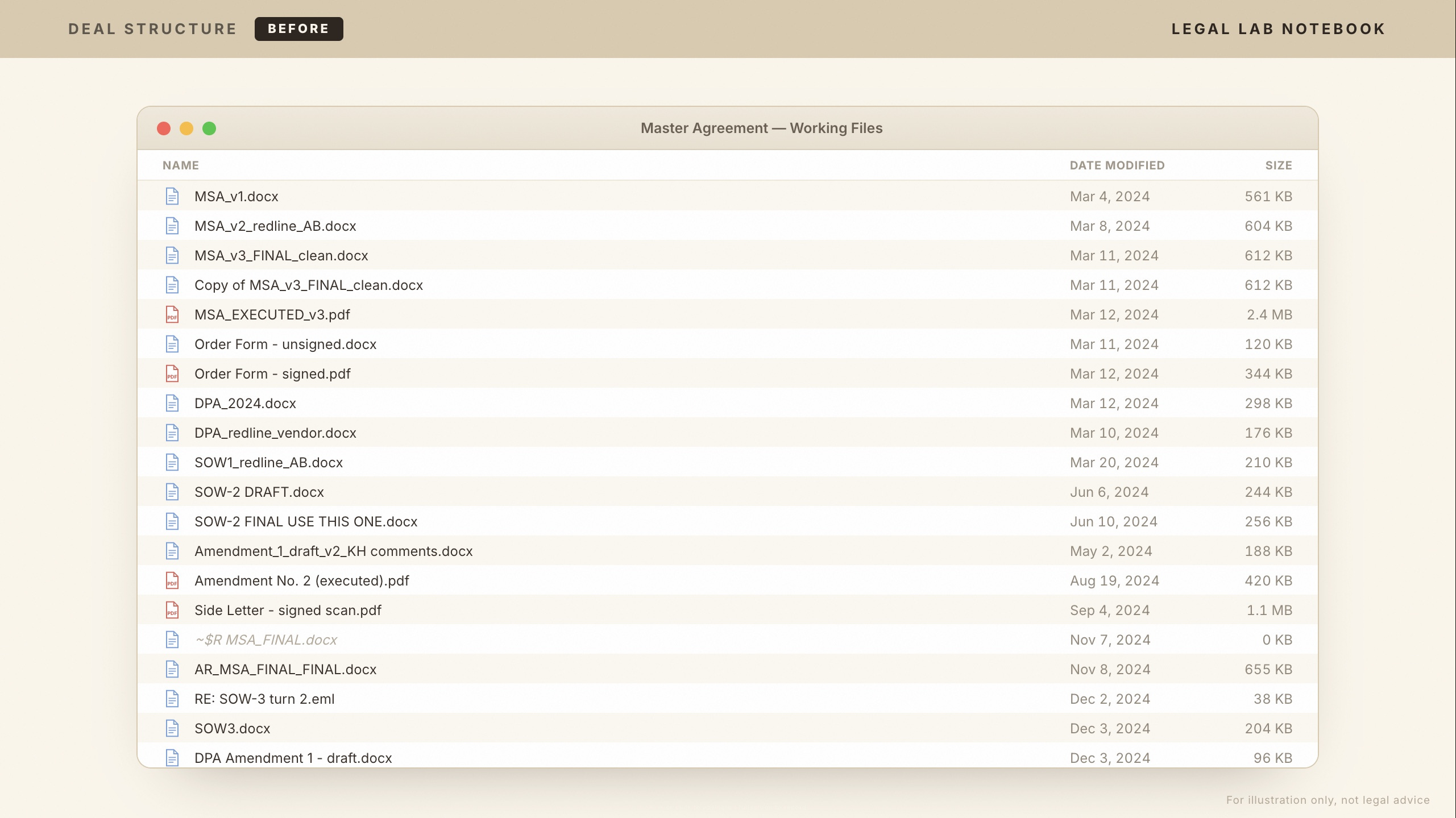
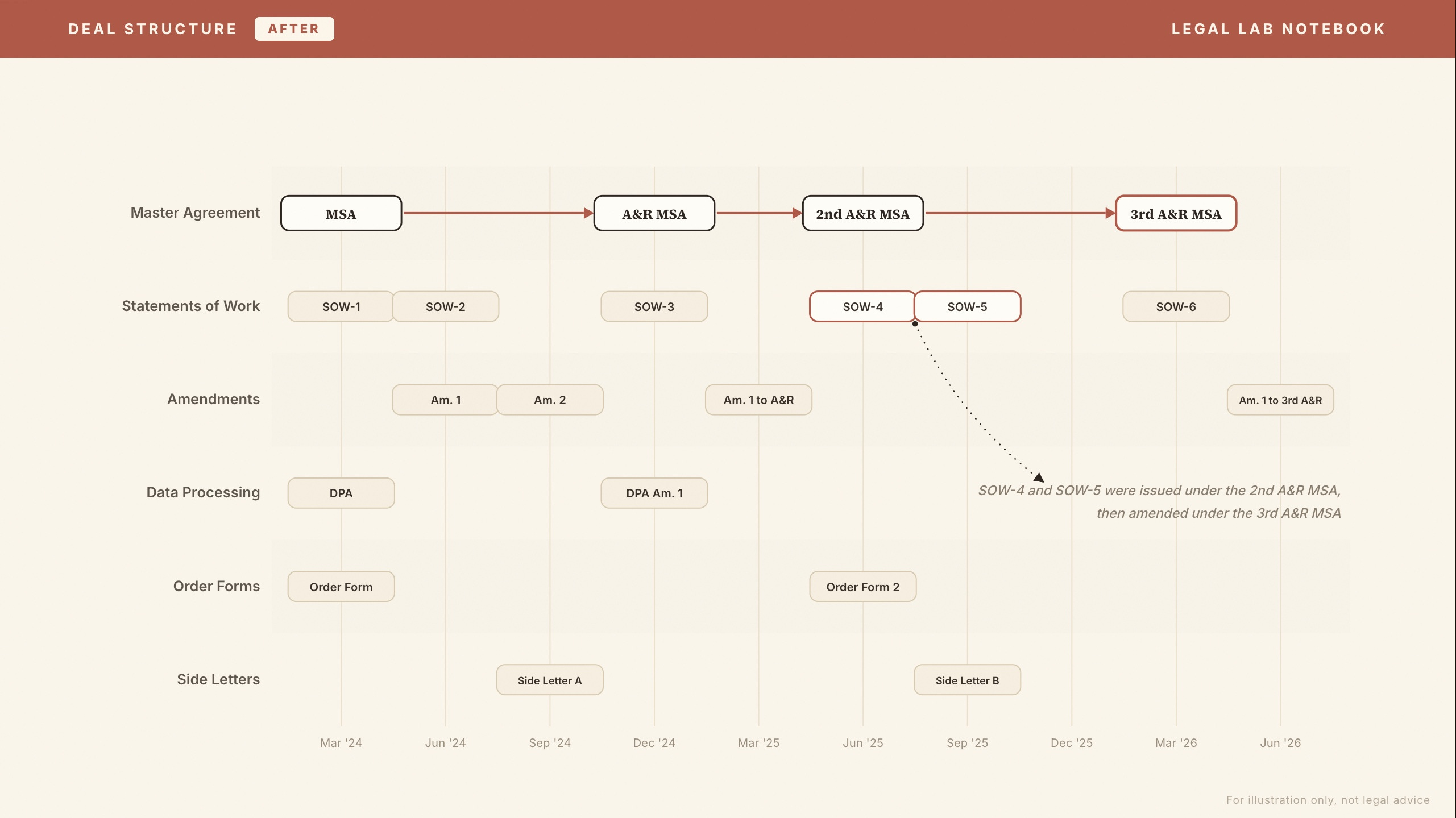
Deal structures: seeing the forest for the trees
A complex deal sprawls across a dozen agreements, and it’s easy to lose track of how they fit and which one controls. A list only tells you what exists; a family tree shows the structure over time.
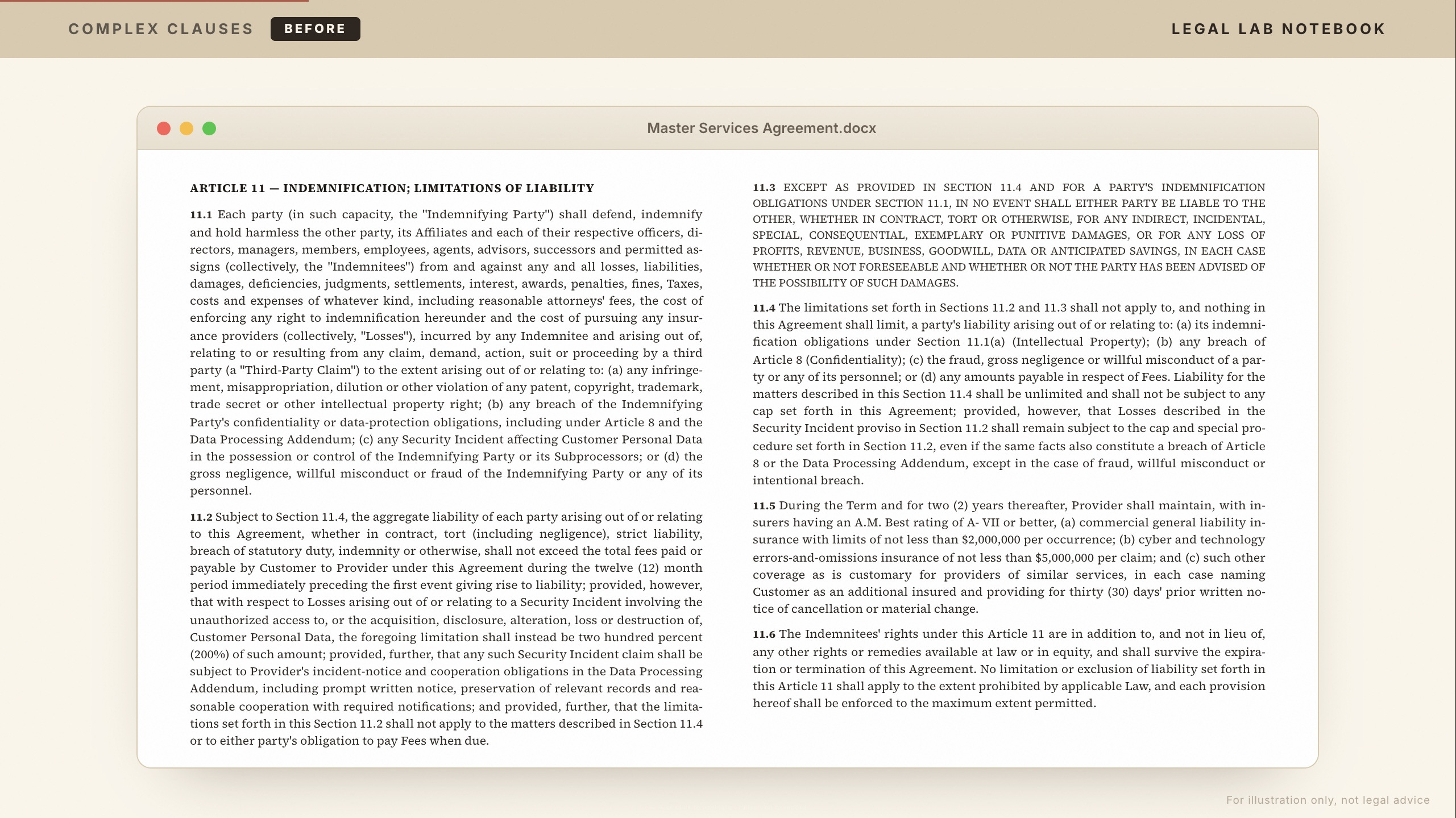
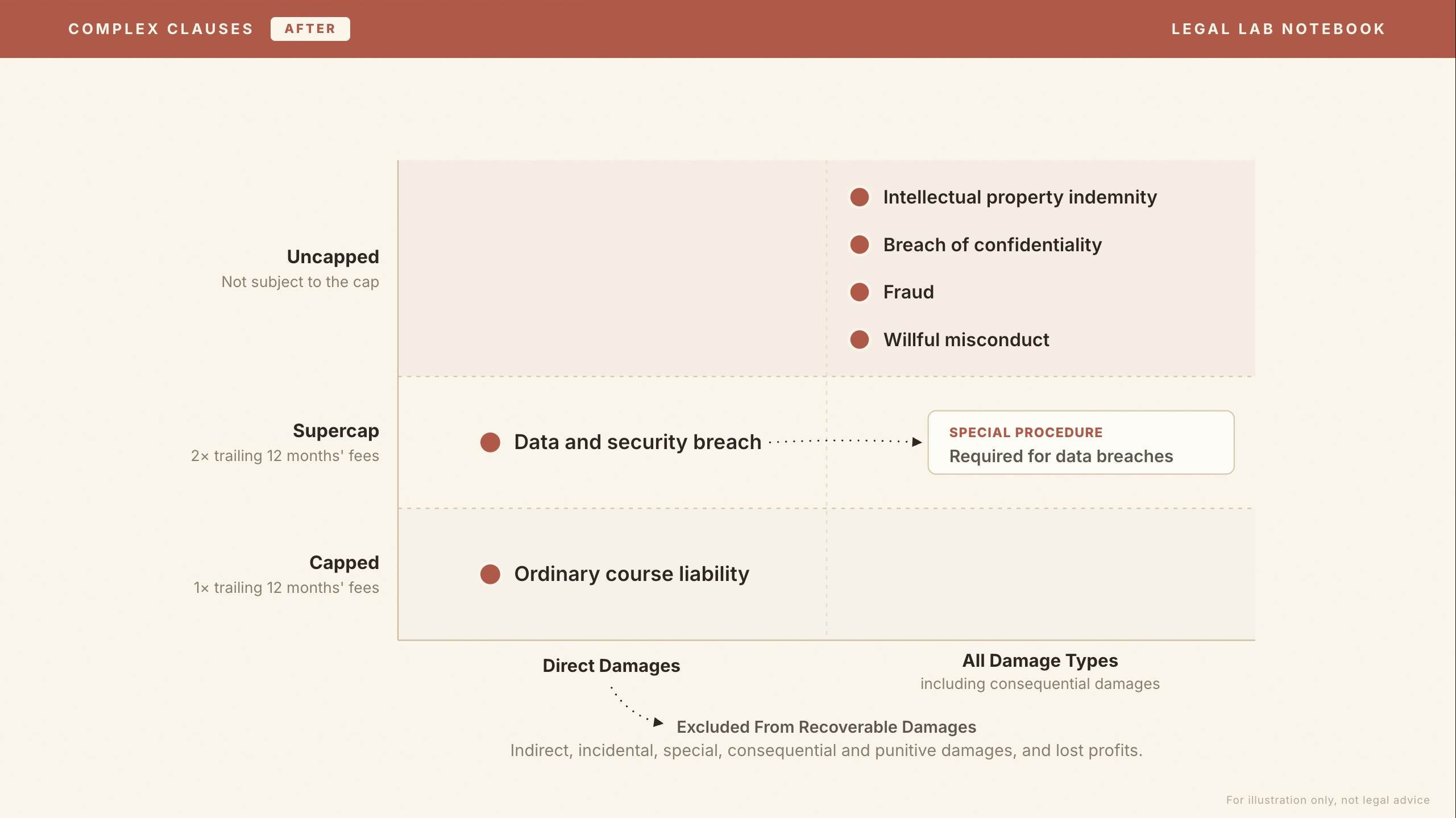
“So what?”: simplifying double or triple negatives
Indemnities and limitations of liability hide what’s covered behind double or triple negatives: an exception to a carve-out to an exclusion, often spread across provisions. A simple matrix can sort these out into buckets that are easy for a busy executive to understand.
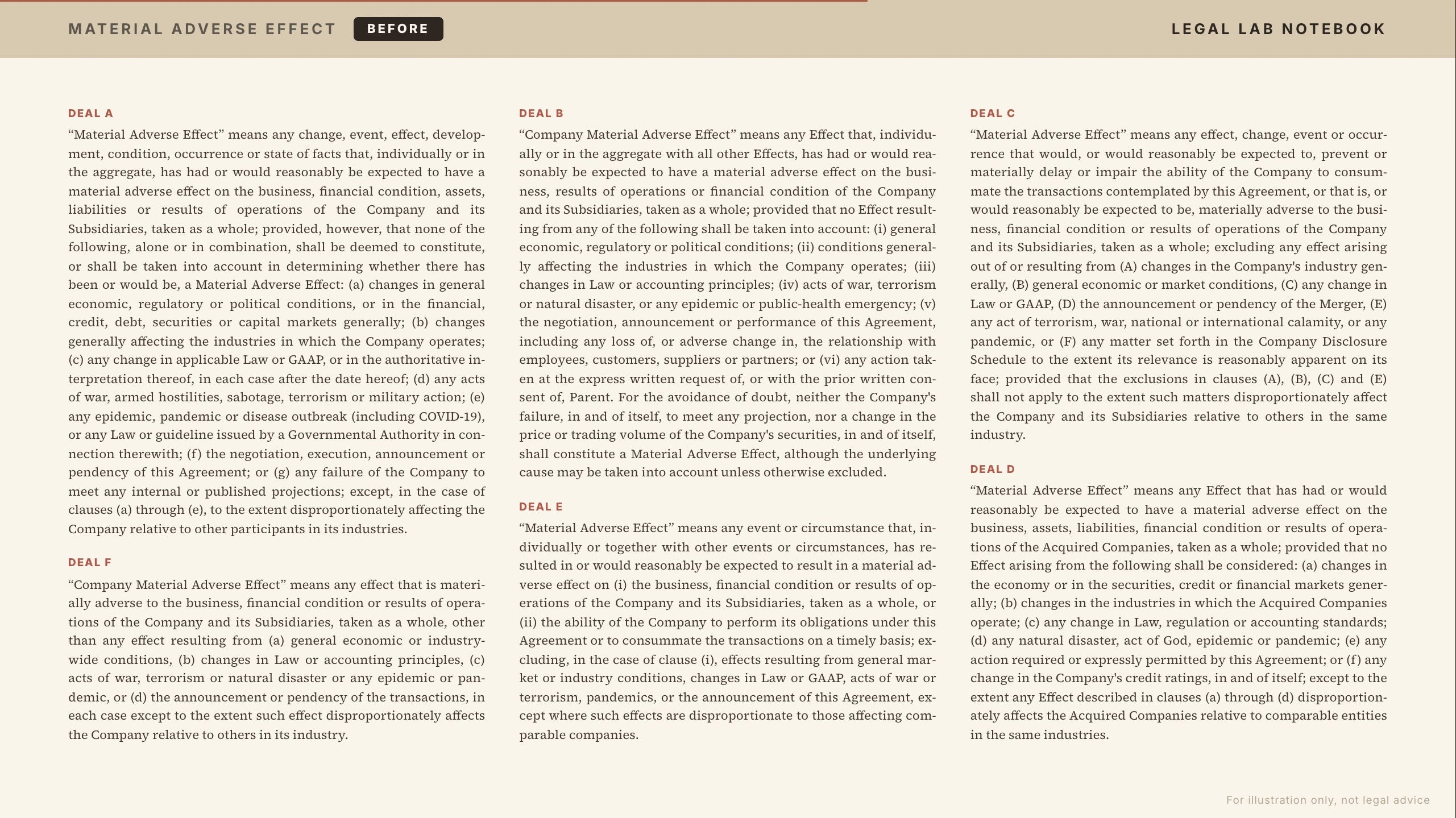
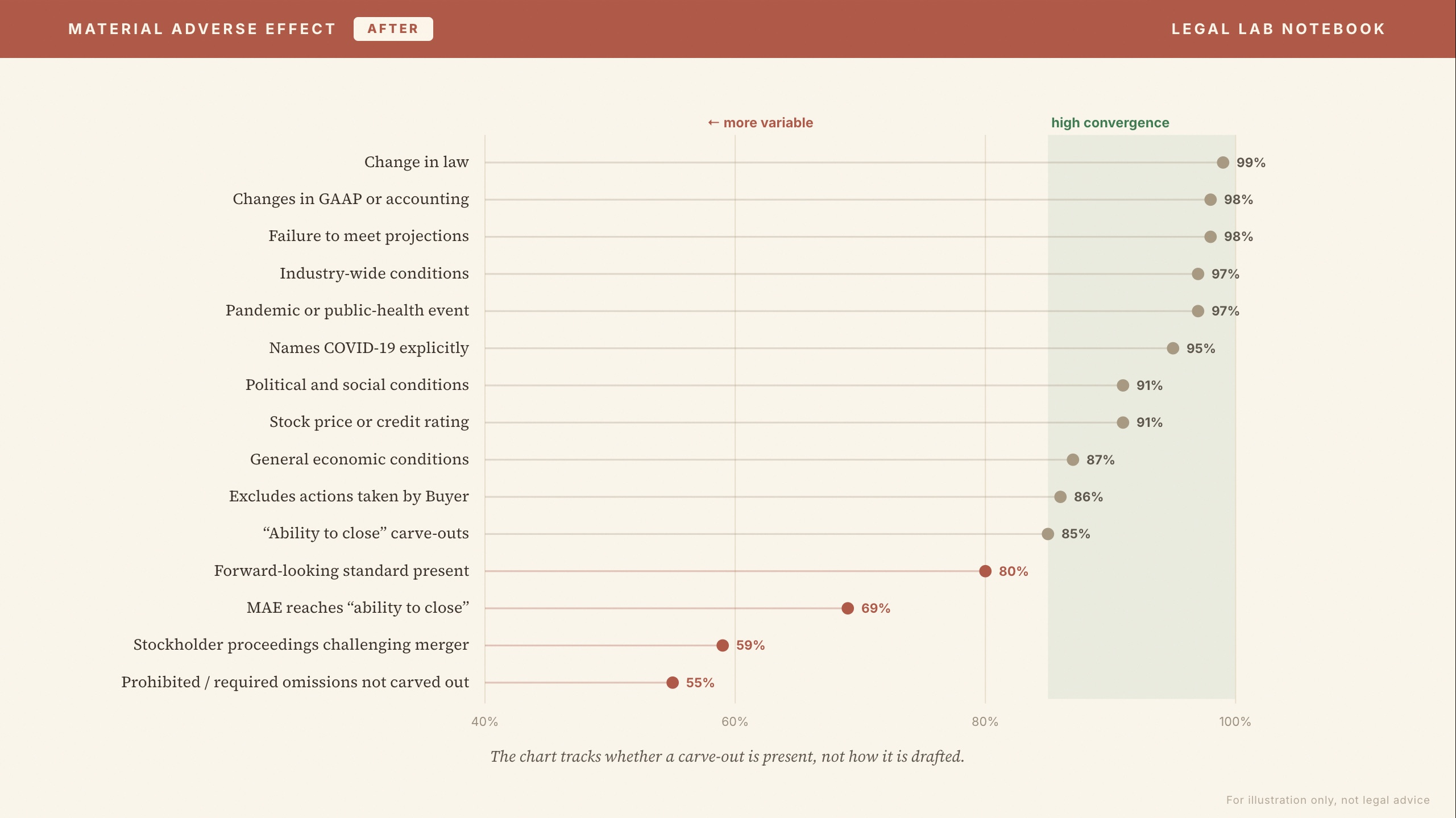
Legal trends: analyzing what’s market
Checking your deal against the market means opening a stack of similar agreements and flipping between them. Make them into a visual grid to better identify trends.
Project management: tracking workstreams
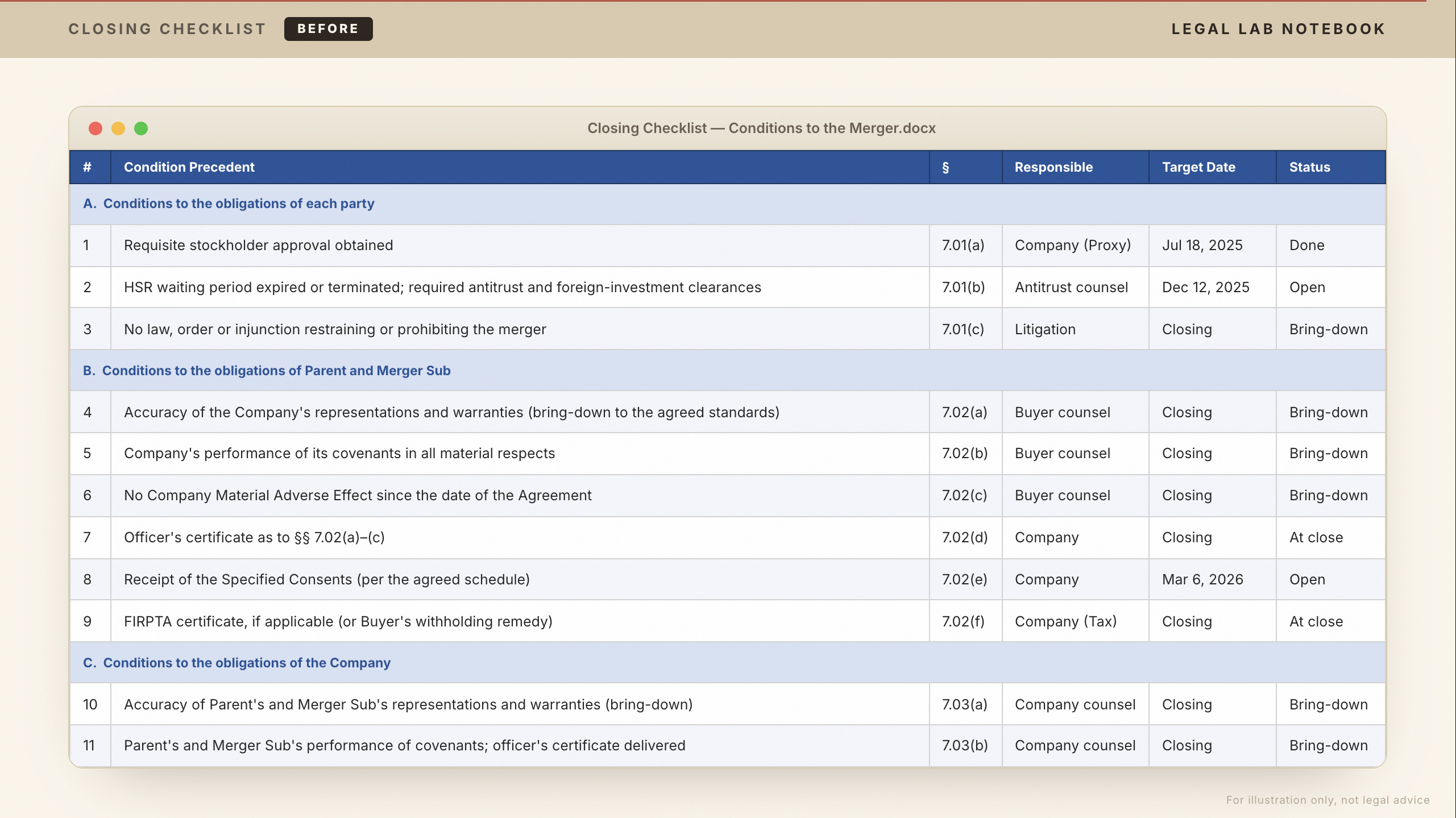
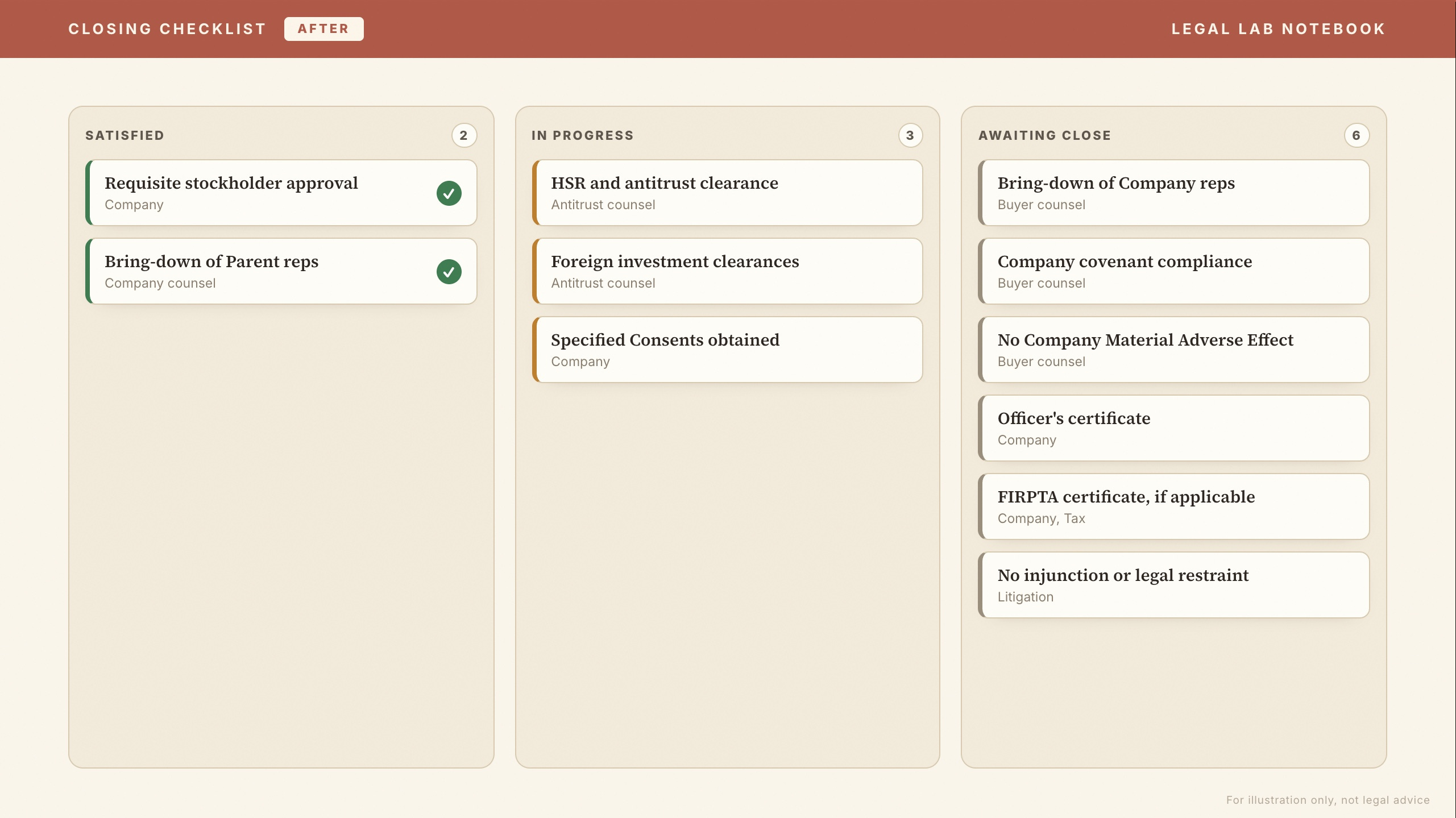
I disliked closing checklists as Word tables, and even as spreadsheets they were a grid I had to reread multiple times for status. A single visual lets you point at one picture instead of walking the table row by row.
Some (failed) experiments
Here are some visuals that sounded great in my head but were overly ambitious. Still, they’re experiments in visualizing law, so I put some into a quick blooper reel.
Giving better legal presentations
None of this is pure legal work per se. The legal reality still lives in the documents.
These visuals are for presenting, for getting a busy person to see the situation fast, which is exactly why they leave detail out. A subway map doesn’t show scale or topography, but nobody faults it.
Try it yourself: next time you’re stuck explaining something hard, ask AI to show it, not write it.
Let me know what visuals you come up with, or if you’d like to learn how to make these.