
This is the first edition of Legal Lab Notebook. Subscribe to receive future posts in your inbox. And if you have a question about AI and law, comment or reply. I read every one.
The market does not care what lawyers think they are worth. It pays for what it needs. And what it needs from lawyers — guiding people through fuzzy natural language — is not going away.
As long as words are ambiguous and people stay unpredictable, there is work for lawyers.
The question is which lawyers.
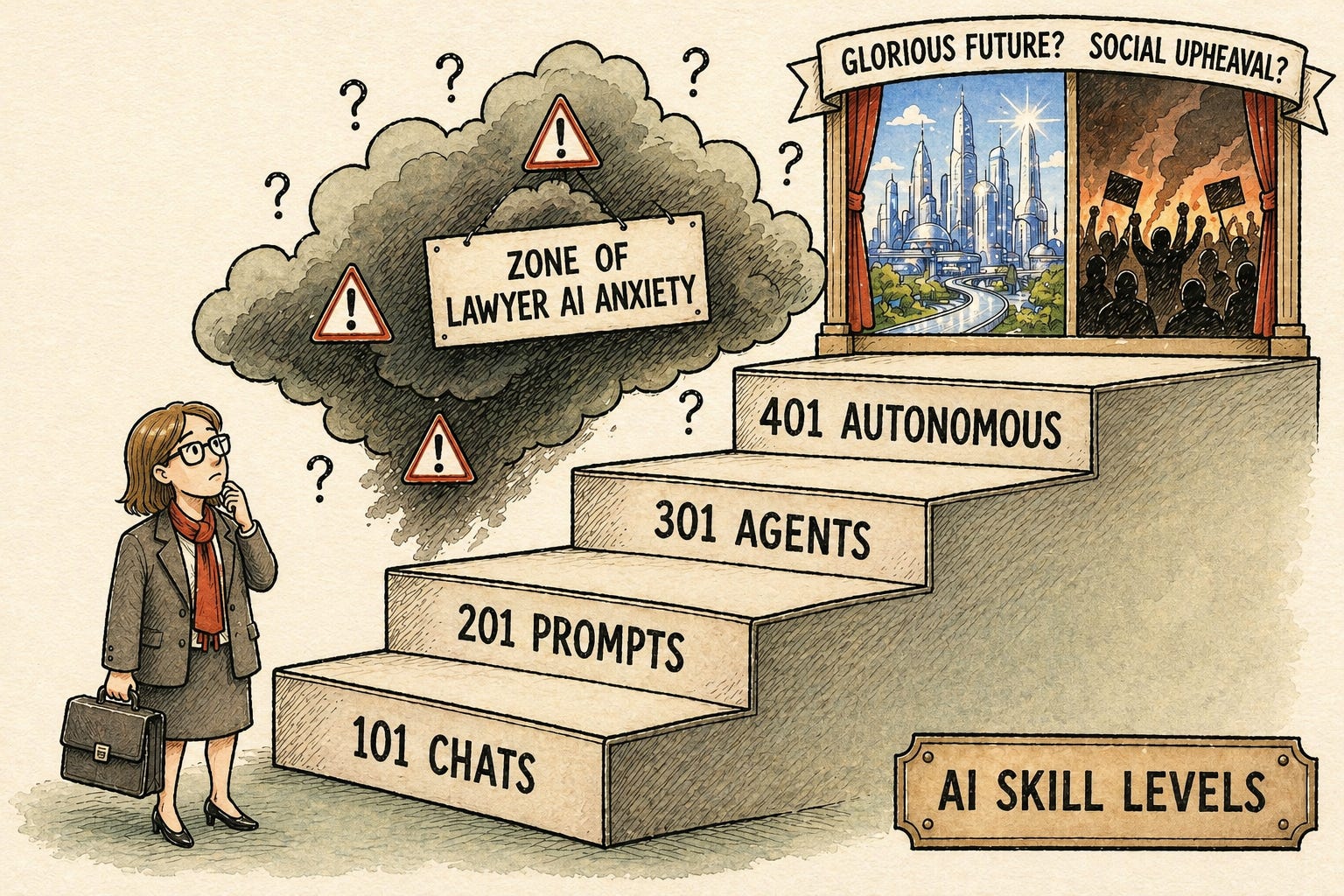
Most lawyers know AI matters. But most sit in the zone of AI anxiety — aware enough to feel behind, not aware enough to take next steps.
That zone is not your fault.
The tools have not caught up to the promise. But the anxiety is keeping good lawyers frozen.
You should not panic. You also should not wait.
Cravath’s insight
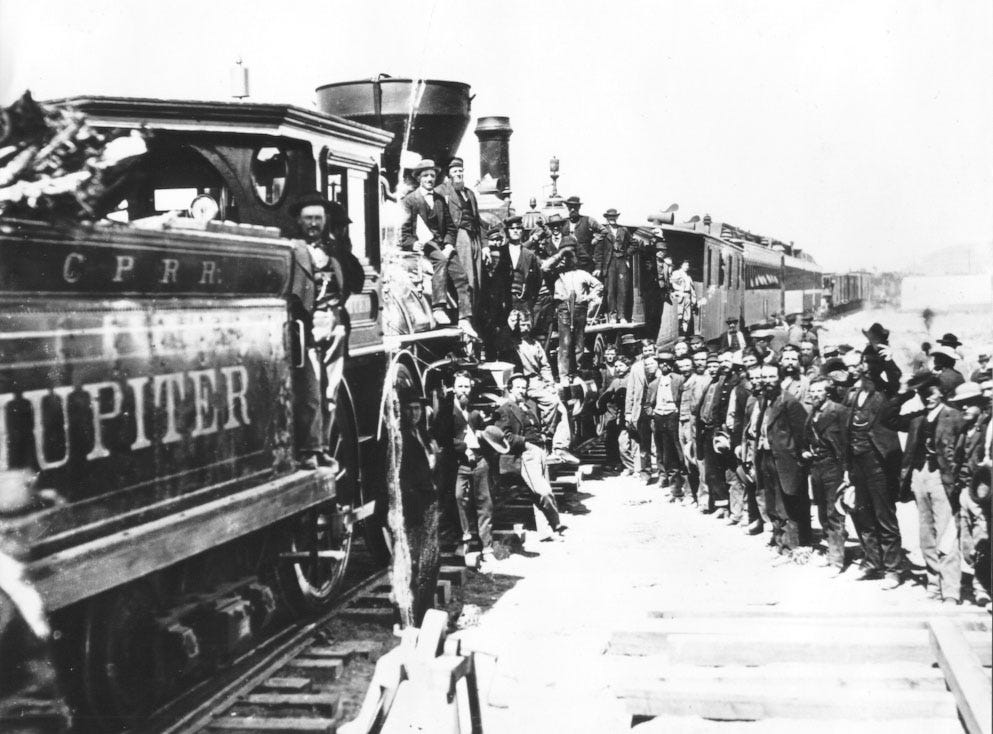
In the 1890s, Paul Cravath watched railroads reshape the American economy and saw that legal practice needed a new structure.
The old model was loose groups of practitioners sharing office space. That was buckling under the vast corporate work now powering American industry.
So he built one. Hire the best graduates, train them intensively, leverage their work. Up or out.
The insight was matching the structure of a law firm to the economic reality of the moment. That model powered BigLaw for 125 years.
We are at another one of those moments.
The leverage is shifting
The Cravath system worked because associate labor was the cheapest legal intelligence at scale. Associates did research, drafted contracts and prepared memos. Partners reviewed, refined and applied judgment — with personal relationships to boot.
AI is changing that equation.
The work that made associates valuable — research, first drafts, document review, pattern recognition across thousands of pages — is getting cheaper every month. AI does not bill by the hour. It does not need training rotations.
This does not mean associates go away. It means the leverage shifts.
Instead of one partner directing six associates, picture every lawyer directing a team of AI agents — one redlines the agreement, one checks regulatory filings, one maps the counterparty’s disclosures. The lawyer oversees and applies judgment where it counts.
The same leverage Cravath built with associates, built with software.
You are not too late
No one has a magical roadmap. We are all figuring this out in real time.
I ship AI products for a living, and I wrote recently about what I call the plumbing problem: AI nails the hard thinking but breaks on the easy stuff.
AI summarizes 300 pages of regulations but can’t summarize a Slack thread. The tools are powerful but raw.
But they are getting better by the month. And the real value lives right now at the AI 201 skill level — where you learn what AI can and cannot do, build habits around it and develop the judgment to know when to trust it. That judgment is the new competitive edge, and you can only build it by doing.
In 2026, learning AI is not prep for legal practice. It IS the practice.
There is no “too late.” Start simple. Pick one tool and try it on real work — a contract review, a regulatory question, a research memo. Find a fix for 80% of a real problem. It will break, and that is the point.
Then iterate. Each harder task teaches you more about how AI handles your problems, with your constraints. The skill compounds. What starts as fumbling becomes fluency.
Here are two ways to start this week.
1. Have AI interview you
Most people struggle with AI because they do not know what to ask. So flip it — let AI ask the questions.
Copy this prompt into your model of choice (free is fine):
You are a consultant helping me figure out how to use AI better in my legal practice. Interview me. Ask one question at a time about my daily workflows, biggest time drains and tasks I do over and over. After 10 questions, give me your top 3 recommendations for where AI could save me the most time — with a specific tool and approach for each. I don’t want complex setups. I want low-hanging fruit with high ROI.
This works because it forces you to say out loud where you actually spend your hours. AI spots patterns you have gone blind to because they are just “how work is.” I did this exercise myself and was caught off guard — the biggest time sinks were not the ones I would have guessed.
2. Join a bootcamp
I run “Intro to AI 301” bootcamps for lawyers to work hands-on with AI tools.
Subscribe to this newsletter for an invite. These are one-hour crash courses for lawyers to get hands-on with powerful AI tools like Claude Code.
See the reality behind the hype. Test the tools and see their limits.
I have no patience for fluff or hand-waving. My bootcamps get lawyers up to speed on the basics of the terminal, slash commands, customizing your agent, managing a context window and building a small project from scratch.
I’m not charging anything. The bootcamps are completely free. You do need a $20 Claude subscription -- I’m not sponsored by anyone; I just really like the tool.
My only ask: Share your learnings with other lawyers and encourage them to start building their AI fluency.
Start now
The lawyer who struggles through a first AI-assisted draft today is building the muscle to orchestrate agents a year from now.
The one who waits is still in the anxiety zone.
Cravath did not win by practicing better law. He won by seeing a shift and organizing around it. That shift is here again. The question is whether you start now.
Thank you for the insightful post, and I’d be curious to hear your thoughts on how junior associates should adapt to these ongoing changes.
As a first year, it’s obvious that today’s legal careers are changing rapidly. For those at my stage of their career, understanding how to work with AI will become the bare minimum. I’ve worked on becoming familiar with the tools I have available and have started building with Claude, but obviously lack the experience to apply my own judgment.
I’ve tried to speed-run that judgement by using AI as a vehicle to better understand the core documents I’m working on (e.g., comparing purchase agreements from two separate deals, and using AI to compare which provisions differ and why). Despite this, it seems like the window may quickly be closing for junior associates to ride the wave of technological advancement (and develop the skill necessary for differentiation) rather than get left behind.