
Note: Today I’m reflecting on using AI extensively over a long summer break — and what it means for knowledge work. Thanks for reading! Please let me know your thoughts or share with a friend.
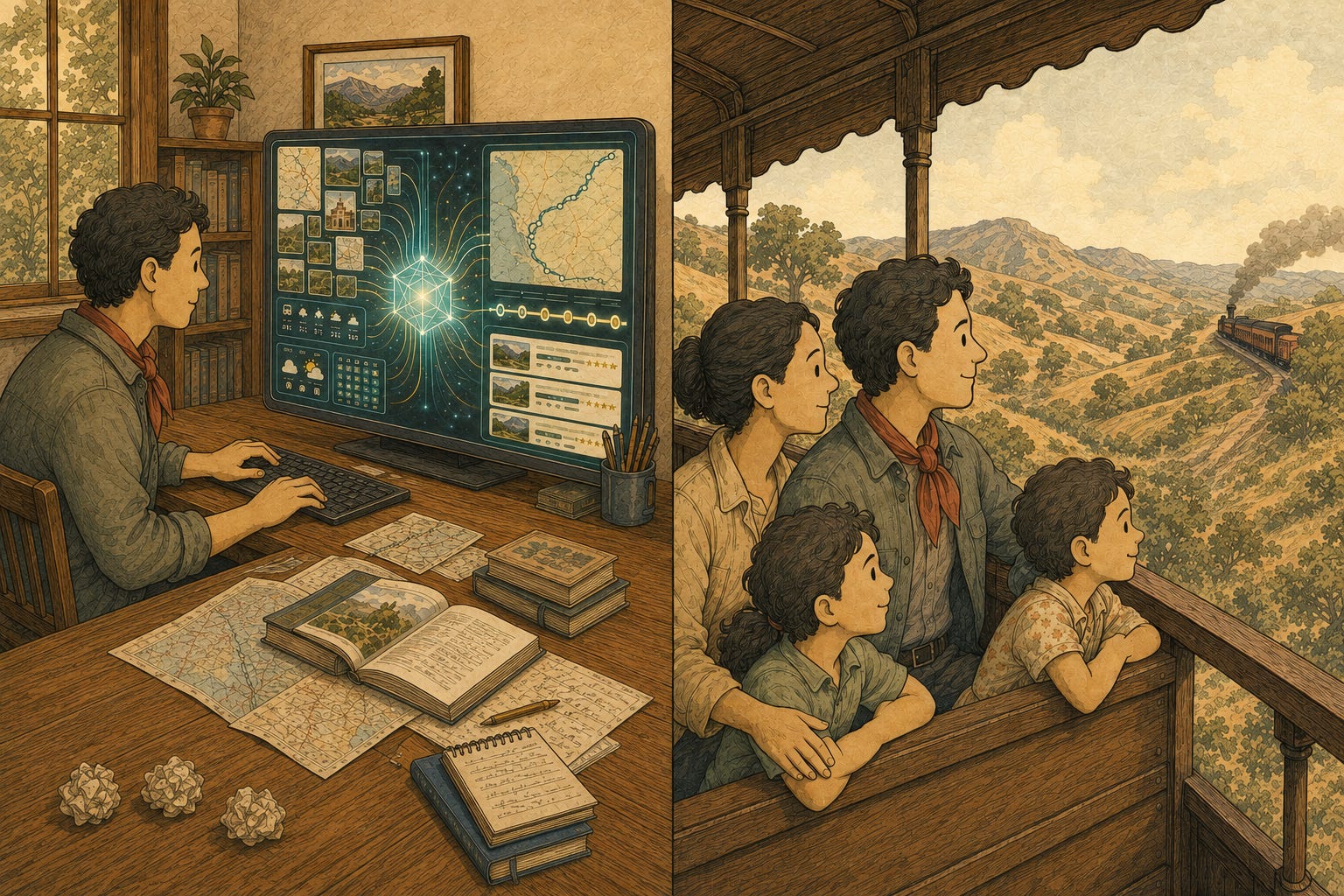
Over the summer, we took a long family vacation, and while it was fun, I felt wistful that my kids are growing up so fast. My time with them is short, especially at this young, cherubic age when they’re still eager to hang out with us.
By contrast, look at all the tedium of modern life straining for our attention. In the few good hours I have with family each day, I’d rather not be paying bills or filing insurance claims.
So I deployed AI into the nooks and crannies of this tedium. I wanted not only for AI to free up my time but also to give me extra buffer to be a more present dad.
My takeaway on our human advantage: If AI can reliably do something, delegate it and don’t look back. Save your time for work where people add more value.
Don’t do what AI can do better
Start with a simple example.
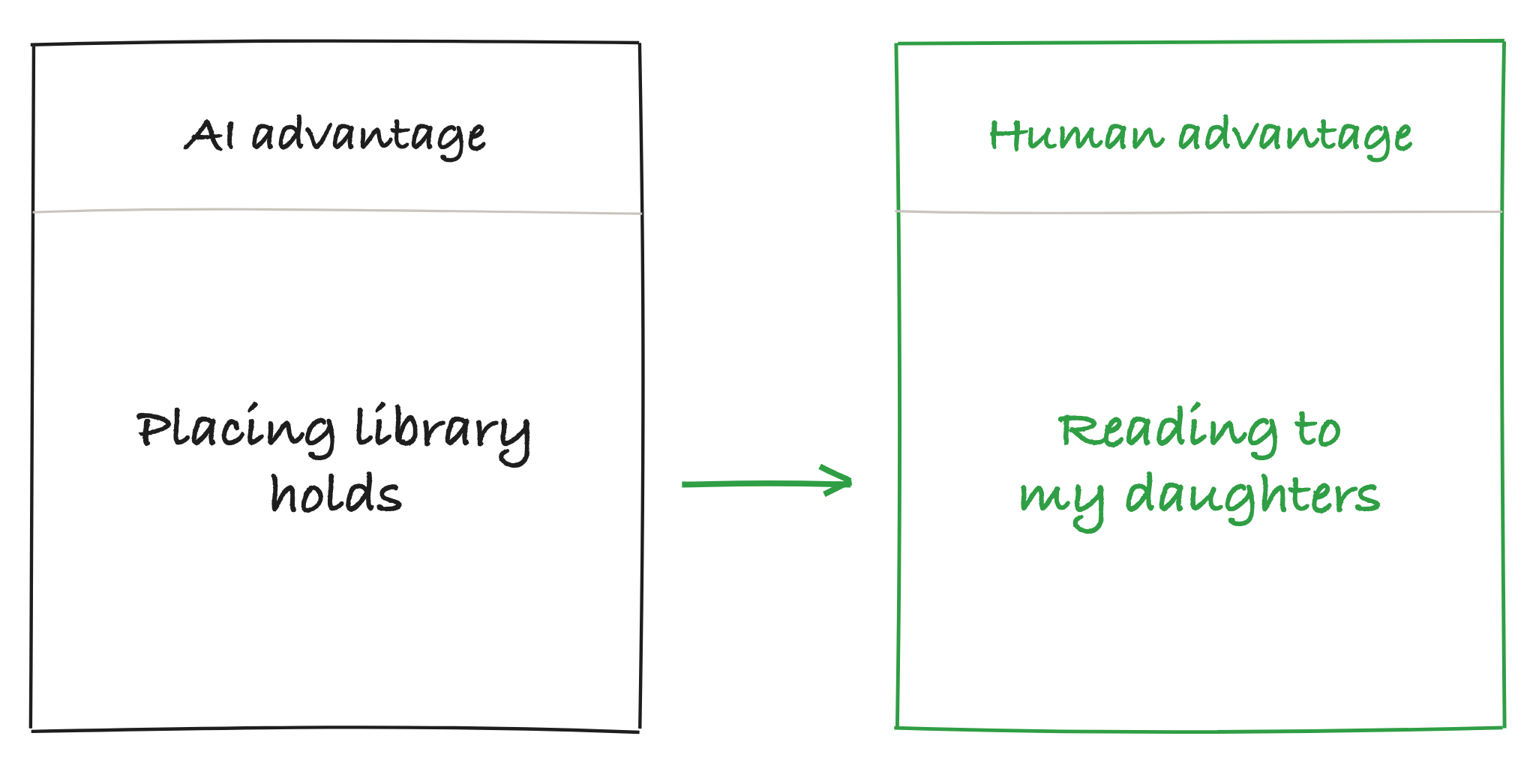
My younger daughter loves being read to. I wanted to check out more Berenstain Bears books for her. I took a photo of recommended titles from the back cover. I asked my household AI agent — meet Momo — to place holds at our library through an integration I built.
And voilà. Momo looked over the image, transcribed the text, gathered the titles and placed holds in my library account. A few days later I picked up the books.
Before, I would’ve loaded the website, typed each title and placed holds one by one, scrolling, clicking and browsing.
Is it an AI apotheosis that my agent can place holds on library books? No, and that’s the point. AI turned a five-minute task into five seconds, not exactly breaking news.
But think about how many five-minute tasks fill our days. There are hours’ worth of them, not to mention their mental friction. Oh, let me do those library holds — okay, I’ll log onto my computer after I wash the dishes. Instead it becomes a trivial photo and message, almost second nature, as if I’m catching up on texts with friends.1
This is a bigger principle than just Berenstain Bears.
This means I should never place library holds, by hand, ever again. Read broadly: If AI can reliably do something, I should delegate and no longer do it myself. AI has proven its comparative advantage in these simple, rote administrative tasks.
So long as AI works, delegate ruthlessly.
The ultimate goal was never to search catalogs or get holds anyway. Those were just means to an end. The goal is to read good books to my kids. AI plucked away a small but annoying piece of that work so I can do what I actually care about.
Twenty years ago, as library catalogs moved online, we began searching for books on computers. There was still value in chatting with librarians or browsing book aisles, but those became bespoke tasks we did for special reasons. They were no longer the first port of call when we got to the library.
Using human time wisely
We should save our time for work where we add more value.
As AI sped up more tasks in my life, I had more free time. I then filled that free time with work I found much more interesting. This is where the human advantage begins.
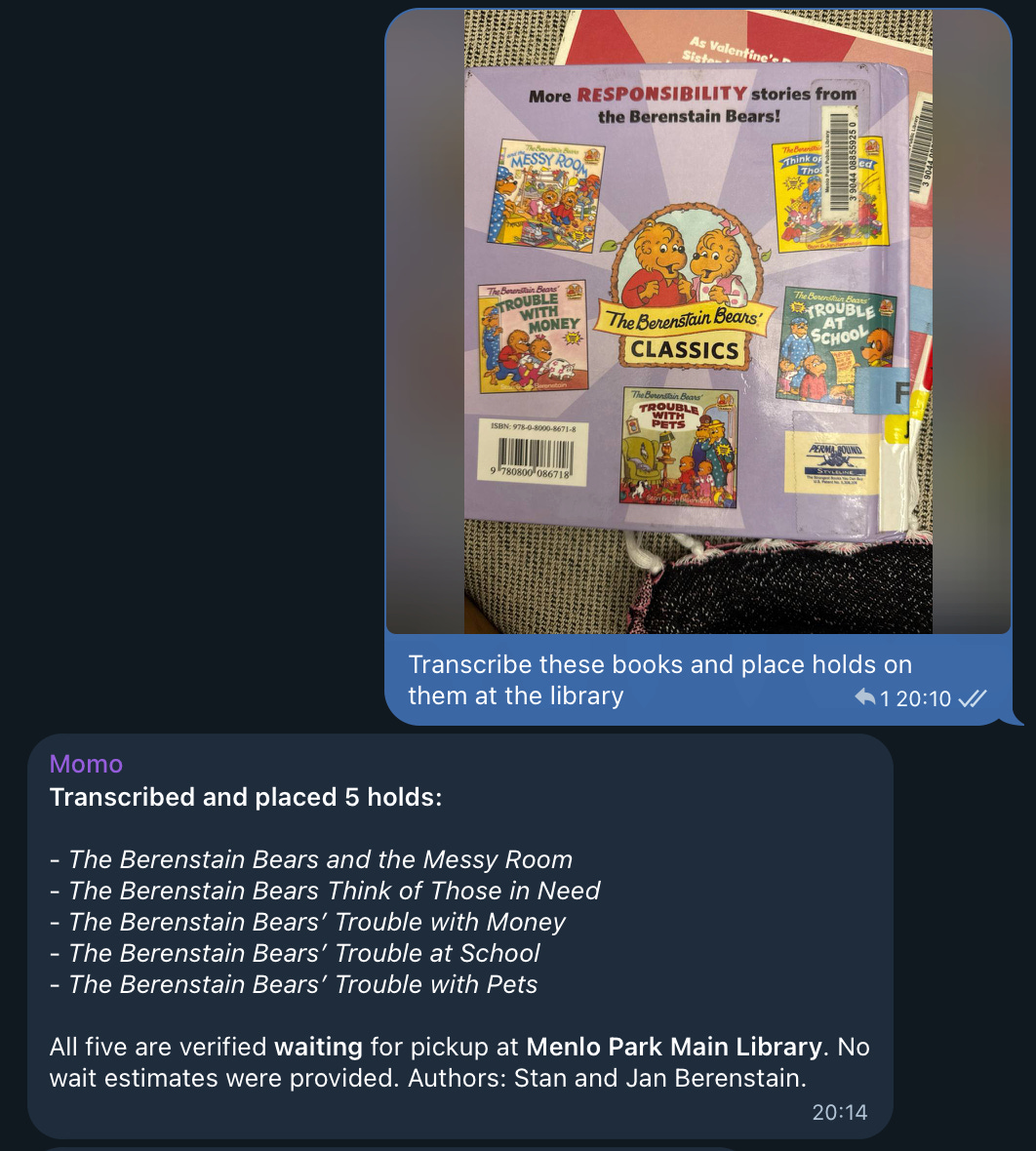
The result is a simple formula:

The human advantage is not coming up with every idea or doing every task. It’s a mix of being creative, weighing trade-offs, committing resources and answering for what follows.
For example, AI is good at trip planning. In thirty minutes, I can come up with a solid weekend getaway plan, which once took hours of browsing blogs and Reddit.2
As AI frees up more time and headspace, I now plan not just more trips but more creative and interesting ones geared for my family.
It began with my nagging question about why we spent so much time exploring every crevice of a grand foreign city yet knew so little about our own home region. Around this time, my girls rode the Big Thunder ride at Disneyland for the first time and to my pleasant surprise, became interested in that time period of the American West.
So I’m adapting that theme for our upcoming trips. We’re doing smaller, more local excursions. I want us to learn about the local history of early settlers, the Gold Rush and railroads.
Of course, I’m using AI to plan Dad’s California History Adventure. At heart, though, it feels uniquely human because I am the one directing the idea and seeing it through. Fine, they may be bored to tears learning about the Transcontinental Railroad. But we are building family memories, and I’m passing along a value — history is cool! — my dad instilled in me.
Agency is hard, though, because it takes willpower. And it’s hard to find the activation energy in our busy lives. I admit that there are days when I do a lot but accomplish little. They’re full of tasks but light on purpose: emails, texts and calls, all priorities others dictate for me. I have to fight the urge to fill up my hard-won free time with more menial stuff.
But that’s the human advantage in the AI age. If I can outsource some tedium to AI, then AI can make space for more meaningful pursuits. Things that only I can do and get me closer to my goals. These pursuits needn’t be all that fancy or the stuff that self-help books glamorize. They can be the simple things we enjoy for their own sake, even if they do not look impressive on social media: rest, exercise, time with family, a professional challenge, a hobby or a coffee with friends.
AI can help with these pursuits, but it cannot choose or commit for us. They require an exercise of the will. AI can generate all sorts of ideas, but none matter until a human chooses one.
High-agency lawyers
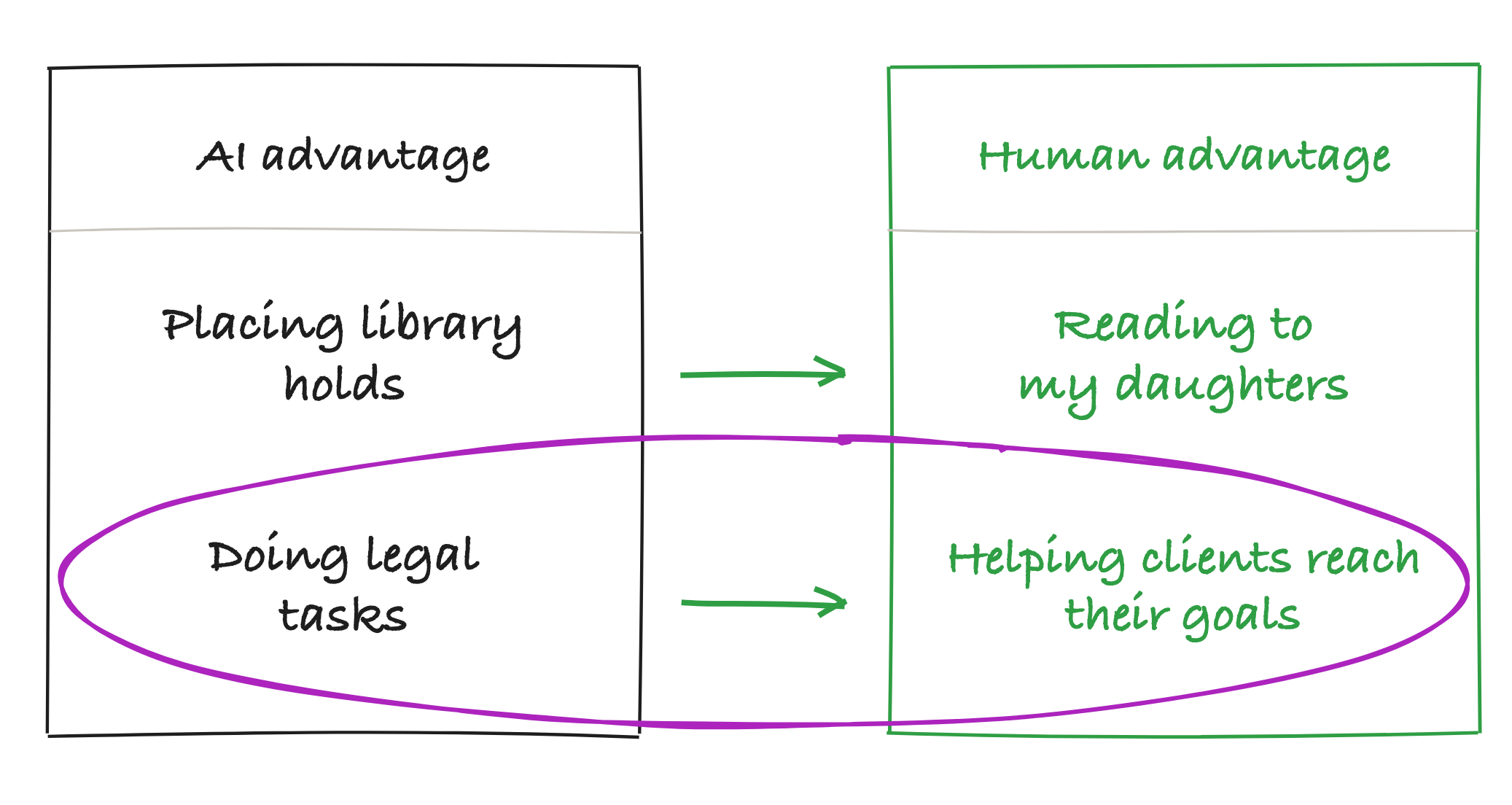
Likewise, lawyers will thrive so long as we evolve past task-oriented work. Lawyers should double down on what humans do best.
Even if imperfect, today’s AI can already research, analyze and draft. It makes mistakes but is getting better scarily fast.
But is a memo the pinnacle of legal work? No. Reasoned analysis is just one factor of good legal practice. Clients build relationships with their lawyers, not with a memo. I’ve already seen the emerging limits of what AI can do for my work.
We as lawyers know the difference between The Law and the messy world of humans administering and testing the limits of that law. Even as AI gets better at legal work, it struggles to know the reality behind it. AI is artificial, after all.
AI can’t place a no-name call to a regulator and detect subtle emotions in the response. It can’t stand before a jury and sway them.
It can’t tell war stories about past fights — especially the mistakes and lessons — that harden a lawyer’s judgment for the next crisis.

The most valuable lawyers are those who know an industry — not just its laws, but the business, technological and interpersonal dynamics. They consistently show up, day in and day out. They reason through trade-offs in a messy, imperfect world.
A person who embodies these traits will still command a premium in this new era. And if they use AI to move even faster and more nimbly, then they just extend their lead.
Building AI integrations and agent upkeep take time. It’s my obsession hobby now. The more tedious the task, the more satisfying it is to automate. And the AI system overall is proving its worth; even my AI-skeptic wife is using it. The many humdrum examples include coordinating multiple work and school calendars, keeping an updated grocery list, managing FSA claims, analyzing insurance policies, tracking CLE credits, summarizing the torrent of school emails and running financial analyses.
I made a reusable template for my trip planning. It’s quite simple. I just list out all preferences: I like history; we want downtime to eat good meals; we never rush; we must have ample playground breaks. I then collect these itineraries and my reflections on what went well and what didn’t, then use them to improve the next trip.
Just discovered Hermes thanks to this post! I realized it doesn’t work on my mobile device - will download on laptop and try it out! Thanks Eric!